A discussion on the true etymology of the Pashto word for wolf that is lewə́-لېوه and a refutatation of its incorrect assignment and descension from from Proto-Indo-Iranian *wŕ̥kas on Wiktionary
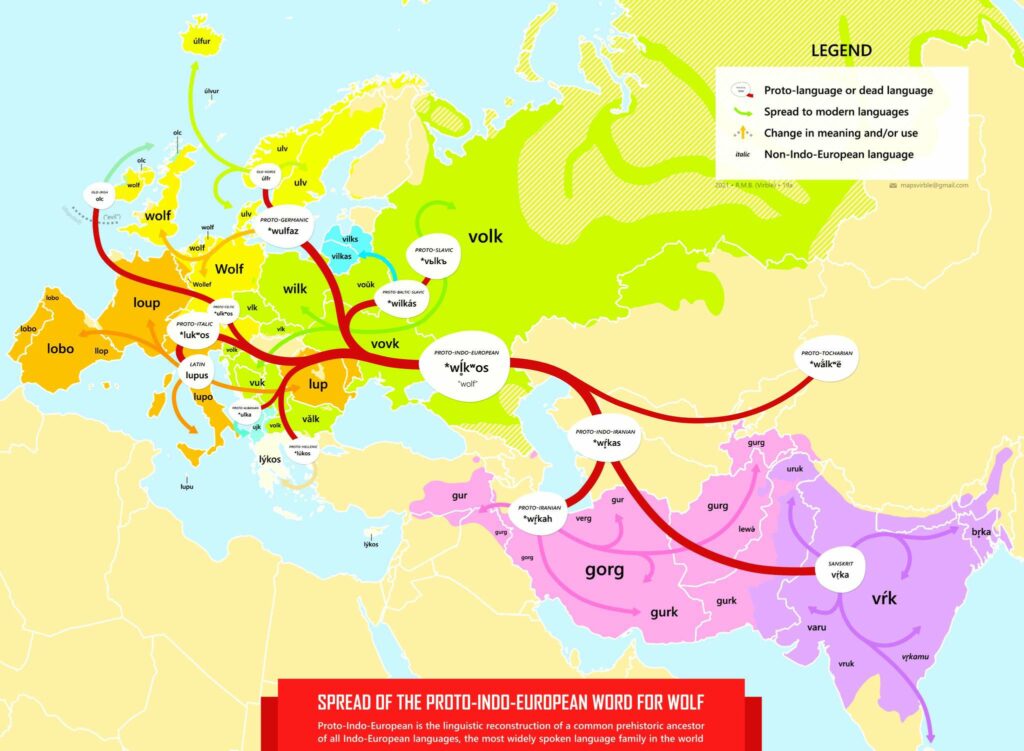
I see this image making rounds on the linguistics part of the internet. Sadly, it has too many problems. Let’s start with the Indo-Aryan(Indic) words. We rarely find registrations of the mentioned words in the modern local dialects. As far as I know, the Hindi, Bengali and some others do actually have attestations of these words. But, in the rest of the Indo-Aryan languages, it’s either that they don’t have a word for wolf or it’s something totally different. For example, in both Urdu and Hindi, Bheṛia بھیڑیا is used. In Punjabi, Baghiāṛ بگھیاڑ is commonly used to refer to the said animal.
All that said, let’s come to my mother tongue. Yes, it’s true that in Pashto, a wolf is called lewə لېوۂ alongside šarmax̌ شرمښ. But, lewə isn’t actually descended from the mentioned PIE word from which all other words in all the other IE languages are descended from. The Pashto word actually descends from the PI word daywáh and not from wŕ̥kah.
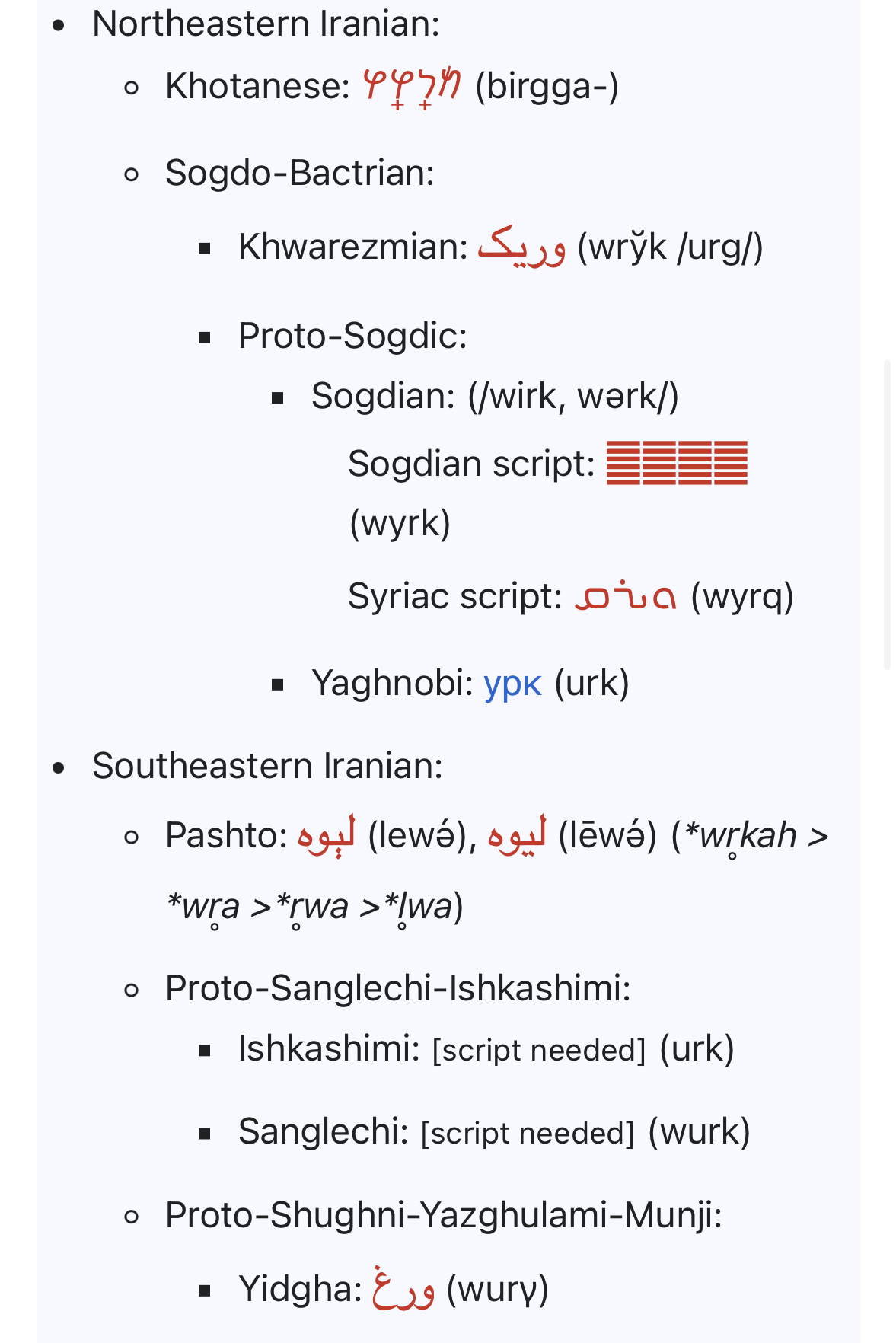
Even on Wiktionary, the etymology is wrongly assigned. The sound shifts in the clusters are also not usually seen in Pashto. On the contrary, George Morgenstierne has also ascribed lewə́-لېوه to the Proto-Iranian word daywáh.
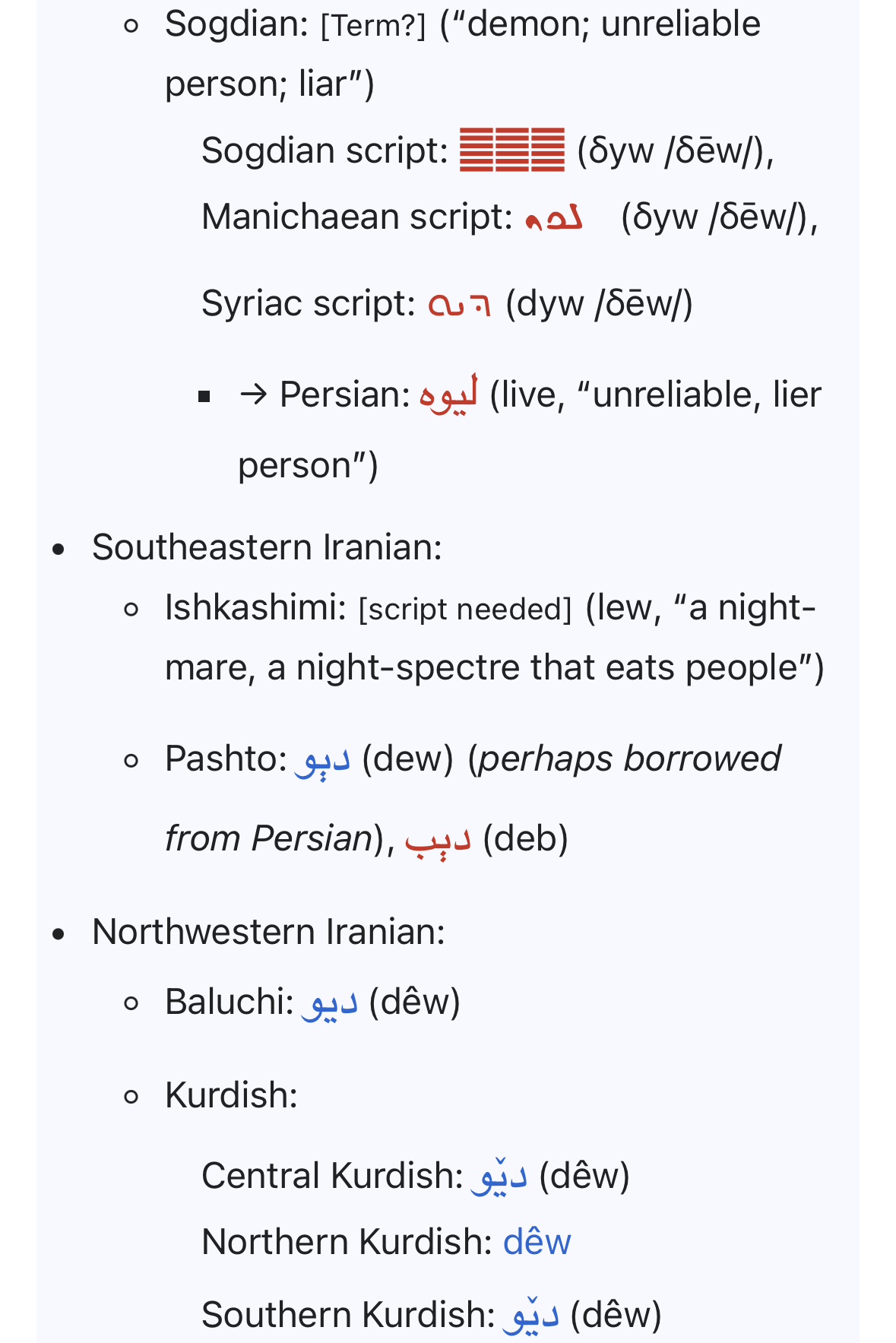
Furthermore, in the above image of the descendents of the word daywáh, see how Ishakishimi, a language in the same sub-family as Pashto has the word lew too. Clearly showcasing that both the Pashto and Ishkashimi words were subject to lambdacism due d>l shift.